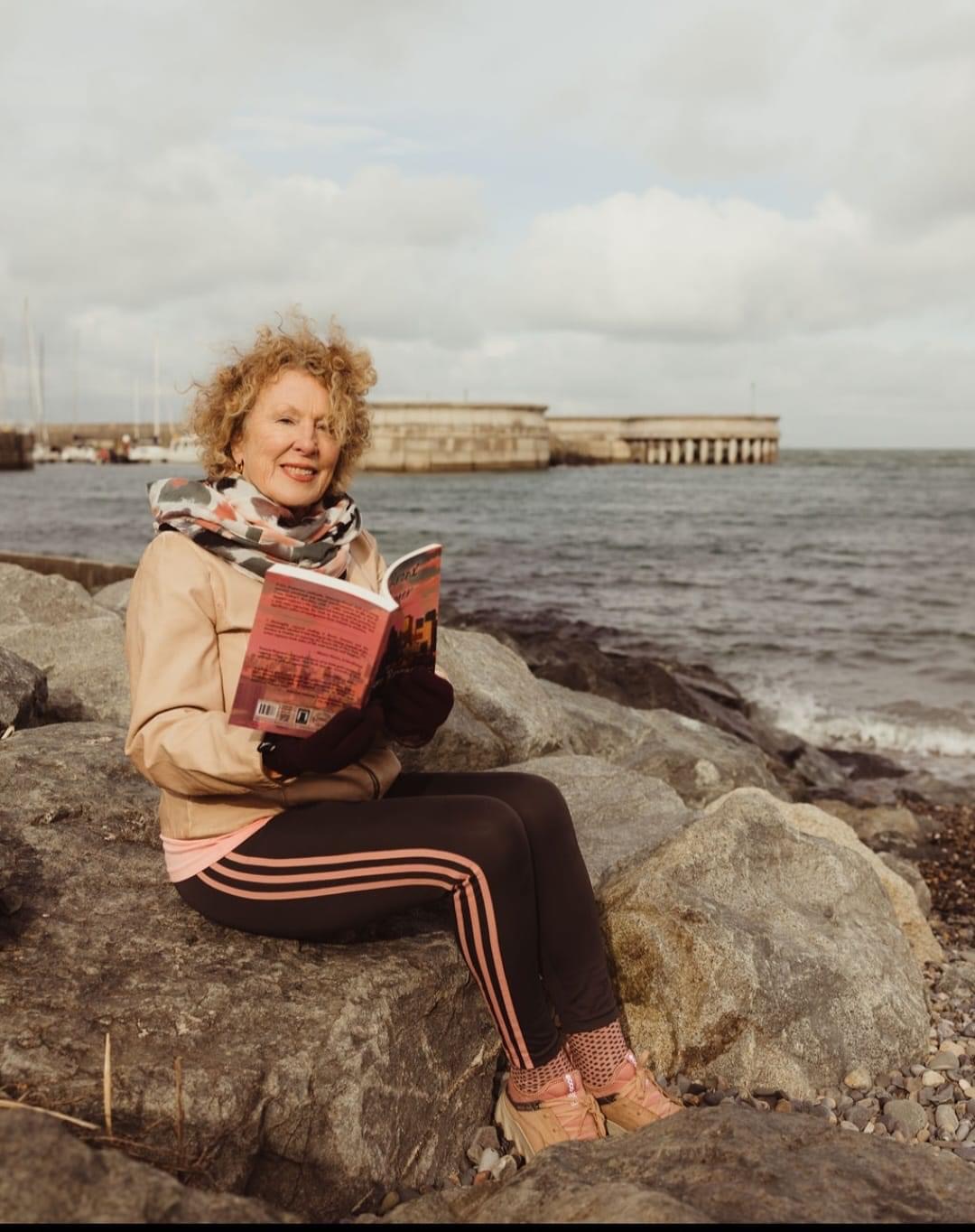
Frances Browner
Hello to all you wonderful readers. Because of the response to my own family heritage stories, published last month, I decided to invite anyone who would like parts of their family heritage stories or a genealogy article to be posted on this site. Please do so by completing the contact form here. Depending on the number of interested submissions, I will make a choice and publish that article. My first choice is Frances Browner. She, not long after I arrived in the Emerald Isle, was my first writing mentor.
Frances is a Poet/Author living in Greystones. Her novel ‘A Bronx Summer’ won the IN-MN Bloomsday Literary Award 2026.
Welcome, Frances, and thank you for sharing your story with us.
My name is Frances. Growing up, I didn’t like my name, until I heard its history. On a beach in Kilkee, my grandaunt Nan told me that my grandmother was also Frances.

I knew that. Her mother was Frances too. I may have known that. What I didn’t know was that her mother, my great great-grandmother, was Frances Knapp, a young Welsh woman who married Paddy Bourke, a merchant seaman from Limerick. She died giving birth to her only surviving child, on January 12th, 1867, in Cardiff. Little Frances was taken back to Ireland by her father when she was four years old. Now, I like my name; now, I’m interested.
I picture her in a velvet dress, lace collar, red wavy hair, fearful but determined on a voyage across the Irish sea and then a train journey perhaps down to Limerick. Her Aunt Kate, more like an older sister, teaching her how to sew and sing. After Kate’s marriage, Frances moving in with her Uncle John at 38, Athlunkard Street, where she stayed until her death eighty-two years later. John Bourke, an itinerant gardener, travelled the countryside, his niece in tow, tending the big houses. They spent nine months in Kilrush once, the housekeeper teaching her how to mend frayed carpeting, paving the way for a job later in Cannock’s on William Street.
It was a lonely life, the slip of a girl and the red-bearded man, no one but each other, in the company of strangers. At home, the street teeming with people, a host of uncles, aunts and cousins, real and honorary. Girls skipping rope on the pavement, the boys kicking a rag ball ‘round the road, sing-songs at Broderick’s corner.
Frances Bourke was twenty-two when she married Paddy Lynch, a baker by trade, keen fisherman and rower, one of the co-founders and the first captain of Shannon Rugby Club. They had nine children, six of whom survived, and when he died in 1915, “we had nothing,” Nan said.
His widow opened a huckster shop in the front room. Sat on the stairs of a summer’s evening with her pals, Madges Turner and Quinlivan, watching people walk out to Corbally or take the Charabanc to Plassy. Over to Murnane’s every morning with the cracked jugs, back after dinner to collect them, warm with milk. Into Jim Packet’s after Mass for the tripe and trotters, home to feed the family, one of whom had been christened Frances.
“Your grandmother was the most like our father,” Nan continued. “She played the violin just like him and she’d his lovely thick hair and she’d the features and all of him and his smile; his quiet and gentle nature. She was a great dressmaker too and that’s what she worked at after she left school.”
In 1922, she married Con Browner, in a tan costume with a chain belt, and a cream kind of a pale-yellow blouse, crepe de chine. The reception was held upstairs in Thirty-eight, the two Madges providing the breakfast; baking and decorating the wedding cake. The Best Man, Dinny Lanigan serenading them with Mother Mo Chroi, but never getting further than There’s a spot. Someone shouting, “Where’s the spot, Dinny?”
Their honeymoon in Dublin was interrupted by the Irish Civil War and they sometimes had to lie on the floor of the trams to avoid stray bullets.
The newlyweds settled in Thomondgate, hiding a man on the run from the Black & Tans in their attic, Con reporting on GAA and politics for the Limerick Leader. Frances returning home to Athlunkard Street every day with her seven children. My father, Connie, eventually deciding to stay, such was the pull of the Parish.
Into the Savoy every Saturday, mother and daughter, to see a film and hear Connie sing at the interval. If the picture was good, they’d stay for a second show. To heck with their tea those nights. Granny Lynch in a long black coat, her Baby Power and ball of snuff deep in its pockets; always a sixpence for a visiting grandchild; waiting at the door for letters from America, from children she never saw again.
My grandmother, Frances Browner, died in 1951, aged fifty-six. Her mother, Frances Lynch, ordered laurel leaves for her grave because laurels, she said, were for champions. My father bestowed the same bouquet on her coffin in 1956. Granny Lynch’s namesakes in the family today are Frances Lynch-Gravelle, Arizona; Frances Spalding, Edinburgh; and me.
Ireland’s Own January 2015





Leave a Reply