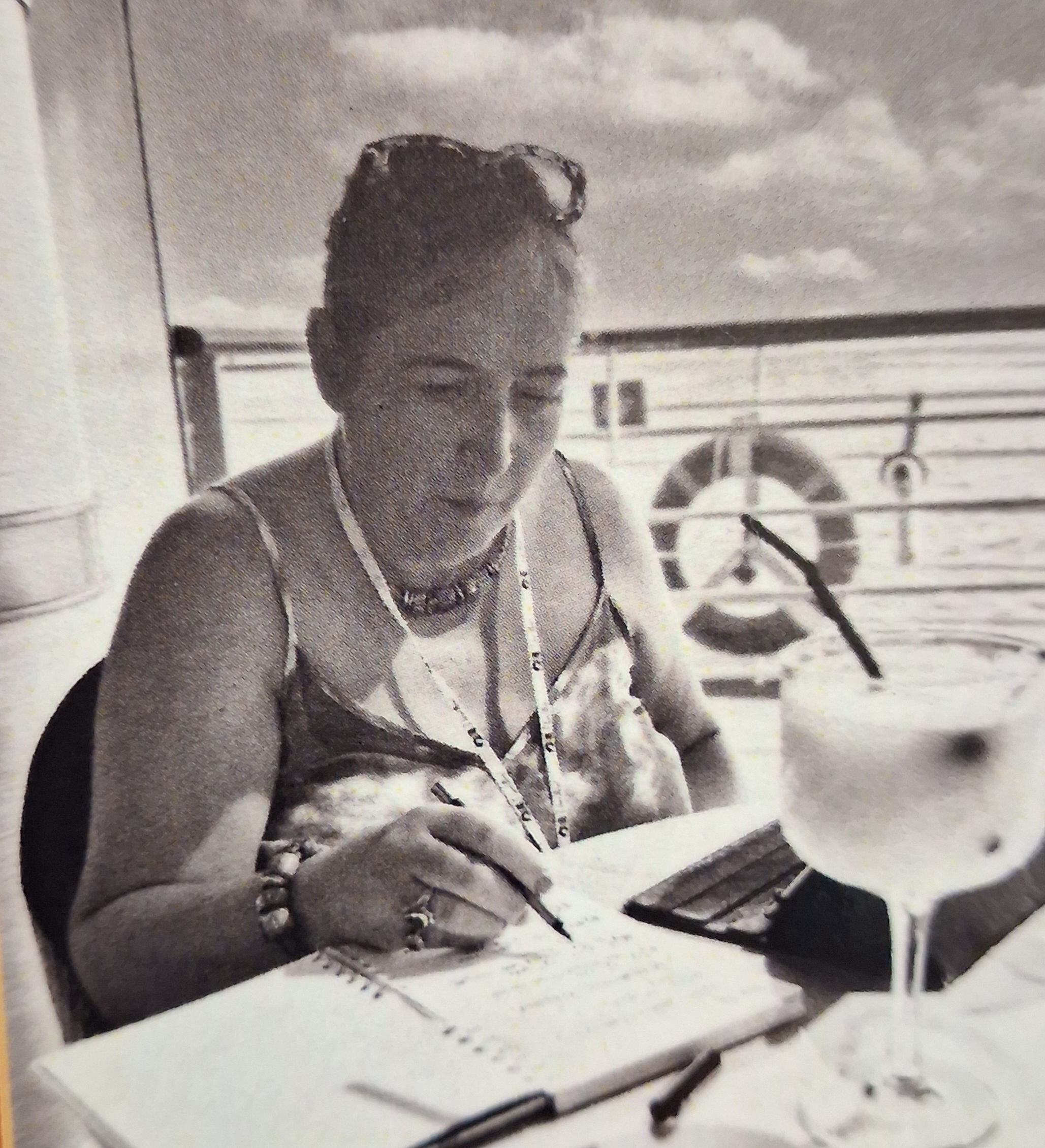
Feature Image – Mary Dillon
I first had the pleasure of meeting Mary Dillon when I joined ‘The Writer’s Room’ in Arklow nearly three years ago. Since then, my wife, Eileen, and I have become good friends with her.
Thankfully, Mary agreed to share her story with us, and it is both fascinating and, at times, witty. I hope she won’t mind me boasting on her behalf, but since joining the Writer’s Room, Mary has written three engaging novellas: Where the River Meets the Sea, The Tide Turns, and The White Horse. They are works of fiction full of adventure, humour, and every now and then, an eerie backdrop.
Mary Dillon Bio

Mary Dillon
A native of Arklow, but a world traveler who has seen diverse places, including Mongolia, Borneo, India, and Cuba. A writer who brings humor and more than a touch of insight into the human condition and into all she writes. Rocked in the cradle in the upstairs living room of her father’s pub, where she spent her formative years. A storyteller from the time she could speak, blending humor, characters, and the world around her into her stories. Very involved in charity and voluntary work and a devoted advocate in the life of her town and for social justice. A joy to be with and who brings fun to all she meets and all she does.
1815 to Current
The story you are about to read is real, incredible, and true. My great-grandfather Patrick Dillon was born in 1815, the year of the Battle of Waterloo. He lived on a very small piece of land in Ballykillageer, near Woodenbridge, Co Wicklow. I believe there were only two things to be found in Ballykillageer: fresh air and hard work. Patrick found both in abundance. He had the most rudimentary of an education, if you could call it that, and, like most of his comrades, did not have reading and writing among his skills. In his lifetime, he lived through Catholic Emancipation, the famine, the Young Ireland rebellion, the Fenian rising, and all other events in between. It was a time of turmoil, all observed from a distance by Patrick. Through it all, Patrick married and continued to work on his small farm.
Patrick proved to be a prolific man in other directions. With his first wife, he fathered a family of thirteen daughters; there would have been pressure on the bathroom with so many girls, if they had had a bathroom. I am told that all the girls went out to work and married in different parts of the county.
Meeting a man outside of your locality was difficult at the time, but many political meetings were held in Woodenbridge, very near to Ballykillageer, thus giving the girls ample choice, and so the Dillon girls married far and wide, and their grandchildren still pepper the fields and towns of Co. Wicklow.
We all have distinctive faces, with brown eyes that look deeply into your soul if you dare to meet our gaze. We also have what is known as a long nose, which does not sound like an attractive feature, but trust me, it is. We all have extroverted, lively personalities and lead the rest in laughter and regaling stories. I have often been out and about, approached by a person unknown to me, and told, ‘You’re a Dillon, aren’t you?’ and we find out we are distant and distinct cousins going back to our roots in Ballykillageer.
Patrick’s wife died in the late 1880s, and Patrick, not a man to be alone, married again to a wife much younger than him. After all the daughters he fathered, he had his first son at 65; this son was quickly followed by another, who turned out to be my grandfather.
Fortunes were still not great in the small fields of Ballykillageer, and William Dillon, my grandfather, left for America in 1910, never to return, or so it was thought. William was looking for a steady living and joined the American army at a good and a bad time. In the Great War, he was stationed in France, where he witnessed terrible sights and was injured in a gas attack. While this may have been a tragedy for most, for William it was fortuitous. He received his army pension, which provided a steady income, and he was able to return to Ireland, where he met Elizabeth Kavanagh; they married, bought a pub, and had a family of six, the second-youngest of whom was my father, John.
After all the girls in the family, my father bucked the trend and had four sons before I finally came along. I have the same Dillon traits of being engaging, outgoing, and having the same long nose and pools of infinity known as brown eyes. It is unusual and unlikely to have a great-grandfather born in 1815, but we are a long-lived family and don’t give up easily- that’s the Dillons for you.

Well, if you enjoyed reading this interesting story, come back to this site: https://lovelifepurpose.co.uk/ at the end of September 2026 for the next interesting article. Maybe you have a story about your name going back into your geneology. Send it to us – it costs nothing. Contact us and we’ll make arrangements to have your story posted.
Please Note that I do not store any information that I receive from the contact form. This site does not generate money or any other benefits from advertising outside of the sale of books authored by me, the links of which will be added to the home page at a later date.

Leave a Reply